
Currently, I’m in the throes of editing The Last Goddess after a wild misadventure that involved three different dev readers (that’s a doozy of a story* I’ll dig into another day). To keep me centered, I return to these five epic pieces of artwork that vibe with Roman gods running amok during the early Renaissance period.
*of course the one time a tweet of mine goes viral, it includes a blatant misspelling.
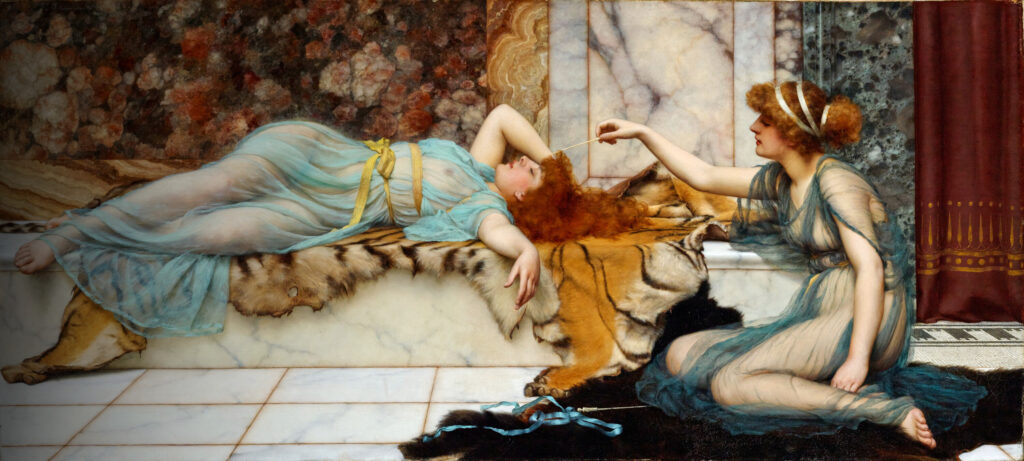
Artist: John William Godward
Year: 1895
While writing about the fire goddess, Helen, I turned to Godward’s Mischief and Repose for inspiration. The two women perfectly capture Helen’s oscillating duality: she’s either tormenting someone for shits and giggles or lazily shirking anything that starts with an r- and ends in -esponsibility.
The fact that they both look like her (+ those gossamer fits she’d steal off of them) is an added bonus.
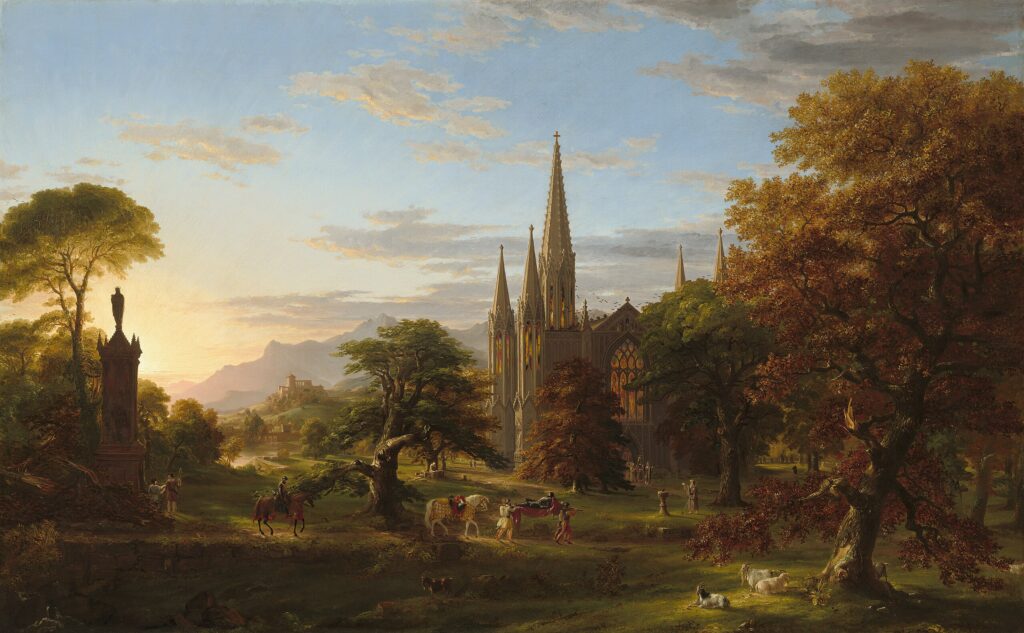
Artist: Thomas Cole
Year: 1837
Full disclose: I’m a diehard stan of Thomas Cole (who’s quite the prolific painter) and his Hudson River School art movement (which he founded in the mid 19th century). That’s why I make zero apologies for the majority of this list being Thomas Cole paintings. If it were up to me, every top artwork listicles would be Cole pieces the whole way down. Top 5 Warhols? It’s all Cole.
Anyway, The Return is the best piece of art to ever hang upon this green earth. And I will field no objections otherwise (put away that art degree and simply B E H O L D this masterpiece with me). The golden-hour lighting, the intrigue of the injured soldier, and the mysterious lone monk striding past the cathedral…all of it culminates into this visual feast of a story. The more you study it, the more vignettes you’ll find hidden amongst the fore- and backgrounds.
This piece alone informed how I wrote the French Alpine village of Lumont in The Last Goddess. It’s cozy and bustling. Kept yet wild. Utilitarian but sacred. It’s got all the right vibes.
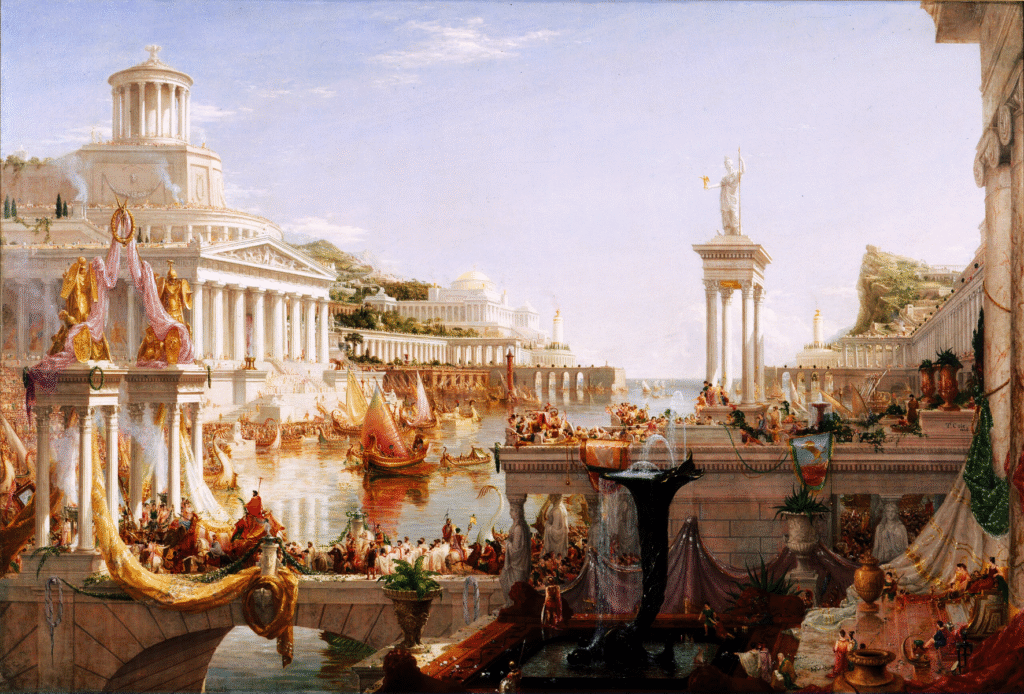
Artist: Thomas Cole
Year: 1835-1836
Thomas Cole created a series of five paintings called The Course of the Empire around an imaginary metropolis that could easily be mistaken for Rome’s own rise and fall. The paintings above and below showcase the metropolis’s fiery turn from vibrancy to destruction (the rest of the series explores the inevitability of earth’s wilderness).
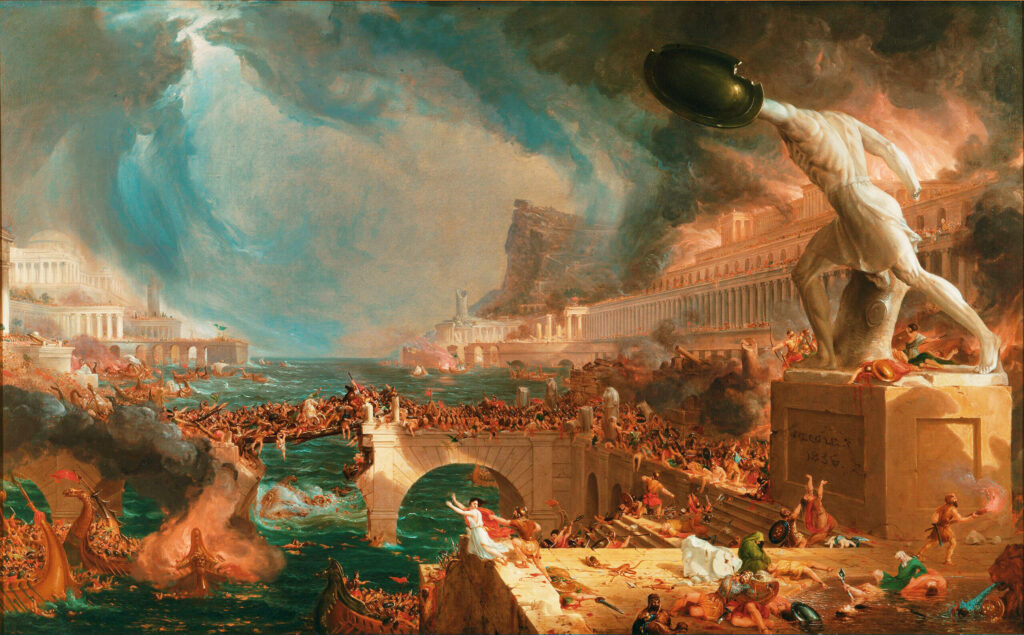
Artist: Thomas Cole
Year: 1833-1836
In The Last Goddess, these two paintings broadened how I depicted Rome’s decadence and drama in the late 14th century under the tutelage of Mavors (the descendant of Mars, the god of war) and a pantheon of demigods. Without giving away any spoilers, let’s just say their mortal subjects had some complaints.
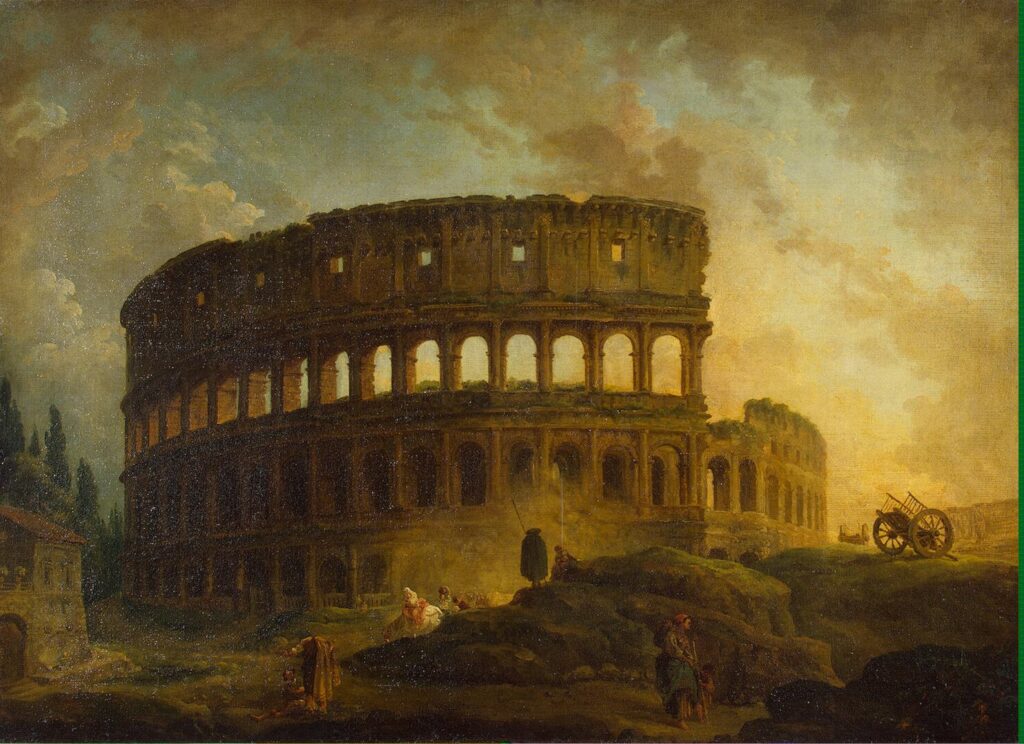
Artist: Hubert Robert
Year: 1790
Robert’s Colosseum captures the amphitheater’s towering presence despite its decline after centuries of disuse. The imposing structure persists as a scar among Roman life—an eyesore that’s blended into the background of daily routine. All it needs is a visionary to revitalize it, and in The Last Goddess, a certain intrepid soul knows exactly how to seize the Colosseum’s political and cultural power.
See you next month for another writing update!
If you’ve enjoyed this content, please consider buying me a coffee. ☕